‏إظهار الرسائل ذات التسميات All. إظهار كافة الرسائل

Touch their Hand Too

8:56 ص Add Comment

Touch their Hand Too

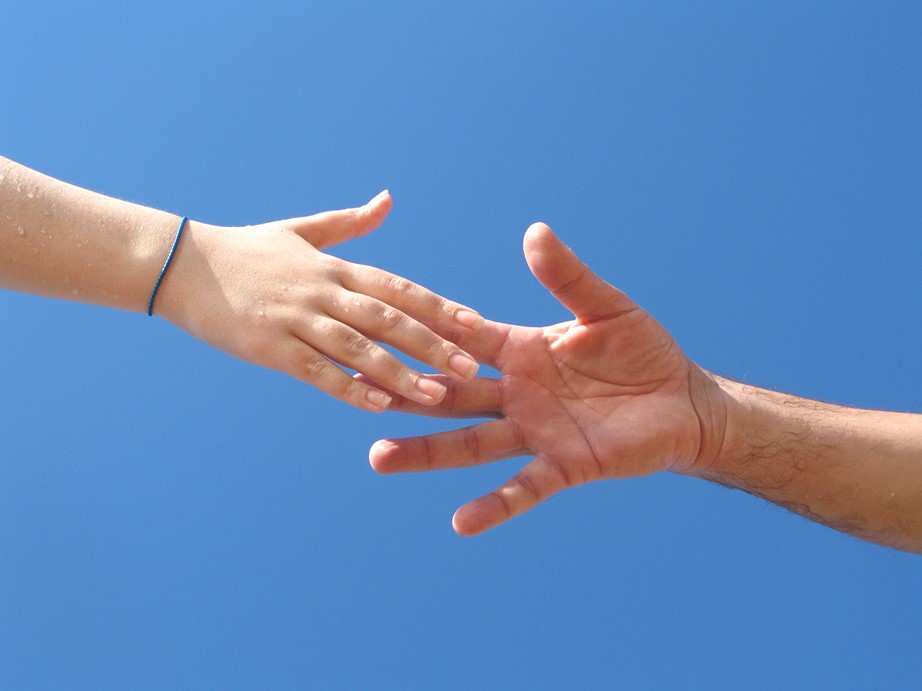
Another study involved librarians who, as they issued a book to a borrower, lightly brushed the hand of the person borrowing the book. Outside the library, the borrowers were surveyed and asked questions about their impressions of the service the

library offered. Those who had been touched responded more favourably to all questions asked and were more likely to recall the name of the librarian. Studies conducted in British super, markets where customers are lightly touched on the hand when they received their change show similar positive customer reactions. The same experiment has also been conducted in the USA with waitresses who derive much of their income from customer tips. The elbow-and-hand touching waitresses made 36% more tips from male diners than non-touching waitresses and male waiters increased their earnings by 22% regardless of which sex they touched. When you next meet someone new and you shake hands, extend your left arm, give a light touch on their elbow or hand as you shake, repeat their name to confirm you heard it correctly, and watch their reaction. Not only does it make that person feel important, it lets you remember their name through repetition. Elbow-and hand-touching — when done discreetly - grabs attention, reinforces a comment, underlines a concept, increases your influence over others, makes you more memorable and creates positive impressions on everyone.
Summary
It makes no difference how you look at it, any crossing of the arms in front of the body is seen as negative and the message is as much in the mind of the receiver as the sender. Even if you fold your arms because, for example, you have a backache, an observer will still unconsciously perceive you as closed to their ideas. Make a decision now to practise not crossing your arms and in the following chapters we will show you what to do to project a more positive, confident image.

The Power of Touch

8:53 ص Add Comment

The Power of Touch

Touching a person with your left hand while shaking hands with your right hand can create a powerful result. Researchers at the University of Minnesota conducted an experiment that became known as 'The Phone Booth Test'. They placed a coin on the ledge of a telephone booth then hid behind a tree and waited for an unsuspecting subject to walk in and find it. When this happened, one of the researchers would approach the subject and say, 'Did you happen to see my coin in that phone booth? I need it to make another call.' Only 23% of the subjects admitted they had found it and gave it back. In the second part of the study, the coin was again placed in the phone booth but when the researchers approached the people who took it, they touched them lightly on the elbow for not longer than three seconds and inquired about the coin. This time, 68% admitted to having the coin, looked embarrassed and said things like, 'I was looking around to try to see who owned it...'
Skilful elbow-touching can give you up to three times the chance of getting what you want
There are three reasons this technique works: first, the elbow is considered a public space and is far away from intimate parts of the body; second, touching a stranger is not considered acceptable in most countries so it creates an impression; and third, a light, three-second elbow touch creates a momen
104
Arm Signals
tary bond between two people. When we replicated this experiment for a television programme, we found the coin return rate varied from culture to culture depending on what the normal touch frequency was in a particular place. For example, with elbow touching, the coin was returned by 72% of Australians, 70% of English, 85% of Germans, 50% of French and 22% of Italians. This result shows how the elbow touch works better in places where frequent touching is not the cultural norm. We have recorded the touch frequencies between people in outdoor cafes in many of the countries we regularly visit and noted 220 touches an hour in Rome, 142 per hour in Paris, 25 touches an hour in Sydney, 4 per hour in New York and 0 per hour in London. This confirms that the more British or German your heritage, the less likely you are to touch others and, therefore, the more successful an elbow touch will be on you.
If you're of German or British origin, you're an easier touch than everyone else.
Overall, we found that women were four times more likely to touch another woman than was a man to touch another man. In many places, touching a stranger above or below the elbow did not produce the same positive results as with directly touching the elbow and often received negative reactions. Touching for more than three seconds also received a negative response, with the person suddenly looking down at your hand to see what you are doing.

How the Rich and Famous Reveal their Insecurity

8:42 ص Add Comment

How the Rich and Famous Reveal their Insecurity

People who are continually exposed to others, such as royalty, politicians, television personalities and movie stars, usually don't want their audiences to detect that they are nervous or unsure of themselves. They prefer to project a cool, calm, controlled attitude when on display, but their anxiety or apprehension leaks out in disguised forms of arm-crossing. As in all arm-cross gestures, one arm swings across in front of the body towards the other arm but instead of the arms crossing, one hand touches or holds on to a handbag, bracelet, watch,' shirt cuff or object on or near their other arm. Once again the barrier is formed and the secure feeling is achieved.
Famous people are just as nervous in public as the rest of us
Men wearing cufflinks are often seen adjusting them as they cross a room or dance floor where they are in full view of others. The Cuff-Link-Adjust is the trademark of Prince Charles, who uses it to give himself a feeling of security any time he walks across an open space in full view of everyone.
Prince Charles' Cuff-Link-Adjust revealing his insecurities

The Definitive Book of Body Language
You would think that after more than half a century of being scrutinised in public and being confronted by large crowds royals, such as Prince Charles, would be resistant to nervous feelings but his small arm-crossing behaviours reveal that he feels just as insecure as you or I would feel in the same circumstances. An anxious or self-conscious man will also be seen adjusting the band on his watch, checking the contents of his wallet clasping or rubbing his hands together, playing with a button on his cuff or using any gesture that lets his arms cross in front of his body. A favourite of insecure businessmen is walking into a business meeting holding a briefcase or folder in front of the body. To the trained observer, these gestures are a giveaway because they achieve no real purpose except as an attempt to disguise nervousness. A good place to observe these gestures is anywhere that people walk past a group of onlookers, such as a man who crosses the dance floor to ask a woman to dance or someone who crosses a stage to receive an award. Women's use of disguised arm barriers is less noticeable than men's because women can grasp onto things like handbags or purses if they become self-conscious or unsure of themselves. Royals like Princess Anne regularly clutch a bunch of flowers when walking in public and the Flowers/HandbagClutch is Queen Elizabeth's favourite. It's unlikely that she would be carrying lipstick, make-up, credit cards and theatre tickets in her handbag. Instead, she uses it as a type of security blanket when necessary and as a means of sending messages; royal watchers have recorded 12 signals she sends to her minders about when she wants to go, stop, leave or be rescued from someone who is boring her.
Handbag used to form a barrier

Arm Signals
Flower grasping shows self-consciousness
The Coffee Cup Barrier
Offering a refreshment during a negotiation is an excellent strategy for gauging how the other person is receiving your offer. Where a person places their cup immediately after they take a drink is a strong indicator of whether or not they are convinced or open to what you are saying. Someone who is reeling hesitant, unsure or negative about what they are hearing will place their cup to the opposite side of their body to form a single arm barrier. "When they are accepting of what they are hearing they place the cup to the side of their body showing an open or accepting attitude.
The arm barrier says 'no' She's now open to your ideas

One of the most common versions of creating a subtle barrier is to hold a glass or cup with two hands. You need only one hand to hold a glass but two hands allows the insecure person form an almost unnoticeable arm barrier. These types of gestures are used by almost everyone and few of us are aware that we're doing them

Hugging Yourself

8:38 ص Add Comment

Hugging Yourself

When we were children our parents or carers embraced or hugged us when we faced distressing or tense circumstances. As adults, we often attempt to recreate those same comforting feelings when we find ourselves in stressful situations. Rather than take a full arm-cross gesture, which can tell everyone we are fearful, women often substitute a subtler version - a PartialArm-Cross, where one arm swings across the body to hold or touch the other arm to form the barrier and it looks as if she is hugging herself. Partial arm barriers are often seen in meetings where a person may be a stranger to the group or is lacking in self-confidence. Any woman taking this position in a tense situation will usually claim she is just being 'comfortable'.
Holding herself like her mother held her when she was a child

Men use a partial arm barrier known as Holding-Hands-WithYourself : it's commonly used by men who stand in front of a
The Definitive Book of Body Language
crowd to receive an award or give a speech. Also known as the Broken Zipper Position it makes a man feel secure because he can protect his 'crown jewels' and can avoid the consequences of receiving a nasty frontal blow.
The Broken Zipper Position
It's the same position men take in a line at a soup kitchen or to receive social security benefits and reveals their dejected, vulnerable feelings. It recreates the feeling of having someone else hold your hand. Adolf Hitler used it regularly in public to mask the sexual inadequacy he felt because of having only one testicle. It's possible that evolution shortened men's arms to allow them to take this protective position because when our closest primate cousins, the chimpanzees, assume the same position their hands cross at their knees.
Humans make a point of hiding the areas they think are their weakest or most vulnerable Arm Signals

The Boss vs The Staff

8:33 ص Add Comment

The Boss vs The Staff

Status can influence arm-folding gestures. A superior type can make his superiority felt by not folding his arms, saying, in effect, 'I'm not afraid, so I'll keep my body open and vulnerable.' Let's say, for example, that at a company social function, the general manager is introduced to several new employees. playing greeted them with a Palm-Down handshake, he stands back from them - a yard away (1 metre) - with his hands by his side or behind his back in the Prince Philip Palm-in-Palm position (superiority), or with one or both hands in his pocket (non-involvement). He rarely folds his arms across his chest so as not to show the slightest hint of nervousness. Conversely, after shaking hands with the boss, the new employees may take full or partial arm-crossing positions because of their apprehension about being in the presence of the company's top person. Both the general manager and the new employees feel comfortable with their respective gesture clusters as each is signalling his status, relative to the other. But what happens when the general manager meets a young, upand-coming male who is also a superior type and who may even signal that he is as important as the general manager? The likely outcome is that, after the two give each other a dominant handshake, the younger executive may take an armfold gesture with both thumbs pointing upwards.
Thumbs-Up: defensive, but he still thinks he's pretty cool

 This gesture has the arms-crossed plus both thumbs up showing that he's feeling 'cool' and in control. As he talks, he gestures with his thumbs to emphasise points he is making, As we've already discussed, the thumbs-up gesture is a way of showing others we have a self-confident attitude and the folded arms still gives a feeling of protection. Someone who is feeling defensive but also submissive at the same time will sit in a symmetrical position, which means one side of their body is a perfect mirror of the other. They display tense muscle tone and look as if they expect to be attacked whereas a person who is feeling defensive and dominant will take an asymmetrical pose, that is, one side of the body doesn't mirror the other.
Getting theThumbs-Up
When you're presenting your case to someone and the Thumbs-Up-Arms-Crossed appears towards the end of your presentation and is clustered with other positive gestures, it signals you can move comfortably into asking the person for a commitment. On the other hand, if at the close of the presentation the other person takes the Fists-Clenched-ArmsCrossed position and has a poker face, you can be inviting trouble by attempting to get a 'yes'. It would be better to ask questions to try to uncover the person's objections. When someone says 'no' to a proposal, it can become difficult to change their mind without looking as if you're aggressive. The ability to read body language allows you to 'see' a negative decision before it is verbalised and gives you time to take an alternative course of action.
When you can see a 'no' before it's said, you can try a different approach.

Arm Signals
People carrying weapons or wearing armour seldom use armgestures because their weapon or armour provides sufficient body protection. Police officers who wear guns, for example, rarely cross their arms unless they are standing guard and they normally use the fist-clenched position to communicate clearly that nobody is permitted to pass where they are standing.

Arm-Gripping

8:30 ص Add Comment

Arm-Gripping

The Double-Arm-Grip is characterised by the person's hands tightly gripping their upper arms to reinforce themselves and avoid exposure of the front of the body. Sometimes the arms can be gripped so tight that the fingers and knuckles can turn white as blood circulation is cut off. It's a person's way of comforting himself with a form of self-hugging. Arm-gripping is commonly seen in doctors' and dentists' waiting rooms or with first-time air travellers who are waiting for lift-off. It shows a negative, restrained attitude.
The Double-Arm-Grip: feeling insecure and not buying what you're selling
In a courtroom, the claimant may be seen using a FistsClenched-Arm-Crossed pose while the defendant may have taken the Double-Arm-Grip position.

Reinforced Arm-Crossing

8:26 ص Add Comment

Reinforced Arm-Crossing

If a person has clenched fists as well as a full arm-cross, this cluster, called Fists-Clenched-Arm-Crossed, shows hostility as well as defensiveness. If it's combined with a tight-lipped smile or clenched teeth and red face, a verbal or even physical attack could happen. A conciliatory approach is needed to discover what is causing it if the reason is not already apparent. This person has an aggressive, attacking attitude.

Crossed-Arms-on-Chest

8:20 ص Add Comment

Crossed-Arms-on-Chest

Both arms are folded together across the chest as an attempt to put a barrier between the person and someone or something they don't like. There are many arm-folding positions and we'll discuss here the most common ones you're likely to see. Crossed-Arms-on-Chest is universal and is decoded with the same defensive or negative meaning almost everywhere. It is commonly seen among strangers in public meetings, in queues or cafeteria lines, elevators or anywhere that people feel uncertain or insecure.
Crossed-Arms-on-Chest: he's not coming out and you're not coming in

The Definitive Book of Body Language
We attended a meeting of our local council where a debate was held on the cutting down of trees by developers. The developers sat to one side of the room and their opponents, the 'greenies', sat on the other. About half those attending sat with their arms crossed at the opening of the meeting and this increased to 90% of the 'greenies' when the developers addressed the audience, and almost 100% of the developers did it when the 'greenies' spoke. This shows how most people will take an arms-folded position when they disagree with what they're hearing. Many speakers fail to communicate their message to their audience because they haven't seen the crossed-arms position of their listeners. Experienced speakers know that this gesture means a good 'ice breaker' is needed to move their audience into a more receptive position that will change their attitude from negative to positive. When you see someone take the arms-crossed position, it's reasonable to assume that you may have said something with which they disagree. It may be pointless continuing your line of argument even though the person could be verbally agreeing with you. The fact is that body language is more honest than words.
As long as someone holds an arms-folded position, a negative attitude will persist.
Your objective should be to try to work out why they crossed their arms and to try to move the person into a more receptive position. The attitude causes the gesture to occur and maintaining the gesture forces the attitude to remain.
Solution
A simple but effective way of breaking the arms-folded position is to give the listener something to hold or give them something to do. Giving them a pen, book, brochure, sample

Reinforced Arm-Crossing
If a person has clenched fists as well as a full arm-cross, this cluster, called Fists-Clenched-Arm-Crossed, shows hostility as well as defensiveness. If it's combined with a tight-lipped smile or clenched teeth and red face, a verbal or even physical attack could happen. A conciliatory approach is needed to discover what is causing it if the reason is not already apparent. This person has an aggressive, attacking attitude.

written test forces them to unfold their arms and lean forward. This moves them into a more open position and, therefore, a more open attitude. Asking someone to lean forward to look at a visual presentation can also be an effective means of opening the arms-folded position. You could also lean forward with your palms up and say, 'I can see you have a question...what would you like to know?' or, 'What's your opinion?' You then sit or lean back to indicate that it's their turn to speak. By using your palms you non-verbally tell them that you would like them to be open and honest because that's what you're being.
Arm Signals
Why am I holding all these pens, pencils and brochures?' asked the customer, who began to look like a decorated Xmas tree. I'll come to that later,' said the negotiator.
Salespeople and negotiators are often taught that it's usually safer not to proceed with the presentation of a product or idea until the prospect's reason for folding his arms is uncovered. More often than not, buyers have hidden objections that most salespeople never discover because they missed seeing the buyer's arms-folded cluster, signalling that he was feeling negative about something.

Gender Differences

8:19 ص Add Comment

Gender Differences

Men's arms rotate slightly inwards while women's arms rotate slightly outwards. These rotation differences have enabled men to aim and throw more accurately, while women's splayed elbows give them a wider, more stable position for carrying babies. One interesting difference is that women tend to keep their arms more open when they are around men they find attractive and are likely to fold their arms across their breasts around aggressive or unattractive men.

Arm Signals
Inward rotating arms allow men to throw accurately; women's outward rotating arms make for better carrying

Yes...But I'm Just 'Comfortable'

8:11 ص Add Comment

Yes...But I'm Just 'Comfortable'

Some people claim that they habitually cross their arms because it's comfortable. Any gesture will feel comfortable when you have the corresponding attitude; that is, if you have a negative, defensive or nervous attitude, folded arms will feel comfortable. If you're having fun with your friends, folded arms will feel wrong. Remember that with all body language, the meaning of the message is also in the receiver, as well as the sender. You may feel 'comfortable' with your arms crossed and your back and neck stiffened, but studies have shown that others' reactions to these gestures is negative. So the lesson here is clear - avoid crossing your arms under any circumstances unless your intention is to show others you don't agree or don't want to participate.
You may feel arm-crossing is simply comfortable but others will think you're not approachable.

Why Crossed Arms Can be Detrimental

8:07 ص Add Comment

Why Crossed Arms Can be Detrimental

Research conducted in the United States into the CrossedArms gesture has shown some worrying results. A group of volunteers was asked to attend a series of lectures and each student was instructed to keep his legs uncrossed, arms unfolded and to take a casual, relaxed sitting position. At the end of the lectures each student was tested on his retention and knowledge of the subject matter and his attitude towards the lecturer was recorded. A second group of volunteers was put through the same process, but these volunteers were instructed to keep their arms tightly folded across their chests throughout the lectures. The results showed that the group with the folded arms had learned and retained 38% less than the group who kept its arms unfolded. The second group also had a more critical opinion of the lectures and of the lecturer.
When you fold your arms your credibility dramatically reduces.
We conducted these same tests in 1989 with 1500 delegates during 6 different lectures and recorded almost identical results. These tests reveal that, when a listener folds his arms, not only does he have more negative thoughts about the speaker, but he's 9 I
The Definitive Book of Body Language
also paying less attention to what's being said. It's for this reason that training centres should have chairs with arms to allow the attendees to leave their arms uncrossed.

Arm Barrier Signals

8:04 ص Add Comment

Arm Barrier Signals

Hiding behind a barrier is a normal response we learn at an early age to protect ourselves. As children, we hid behind solid objects such as tables, chairs, furniture and mother's skirt whenever we found ourselves in a threatening situation. As we grew older, this hiding behaviour became more sophisticated and by the age of about six, when it was unacceptable behaviour to hide behind solid objects, we learned to fold our arms tightly across our chests whenever a threatening situation arose. During our teens, we learned to make the crossed-arms gesture less obvious by relaxing our arms a little and combining the gesture with crossed legs. As we grow older, the arm-crossing gesture can evolve to the point where we try to make it even less obvious to others. By

Arm Signals
folding one or both arms across the chest, a barrier is formed that is an unconscious attempt to block out what we perceive threat or undesirable circumstances. The arms fold neatly across the heart and lungs regions to protect these vital organs from being injured, so it's likely that arm-crossing is inborn. Monkeys and chimps also do it to protect themselves from a frontal attack. One thing's certain: when a person has a nervous, negative or defensive attitude, it's very likely he will fold his arms firmly on his chest, showing that he feels threatened.

Laughter In Love

8:00 ص Add Comment

Laughter In Love

Robert Provine found that in courtship, it's also women who do most of the laughing and smiling, not men. Laughing in these contexts is used as a way of determining how successfully a couple is likely to bond in a relationship. Simply put, the more he can make her laugh, the more attractive she will find him. This is because the ability to make others laugh is perceived as a dominant trait and women prefer dominant males, while males prefer subordinate females. Provine also round that a subordinate person will laugh to appease a superior person and the superior person will make subordinates laugh - but without laughing himself — as a way of maintaining his superiority.

 Studies show that women lough at men they're attracted to, and men are attracted to women who laugh at them.
This explains why having a sense of humour is near the top of women's priority list of what they look for in a man. When a woman says 'He's such a funny guy - we spent the whole night laughing together' she usually means that she spent the night laughing and he spent the night making her laugh.
From a man's perspective, saying that a woman has a good sense of humour doesn't mean she tells jokes; it means she laughs at his jokes.
On a deeper level, men seem to understand the attraction value of being humorous and spend much of their time with other men competing to tell the best joke to enhance their own status. Many men also become annoyed when one man dominates the joke-telling, especially when women are present and are also laughing. Men are likely to think the joke-teller is not only a jerk but he isn't particularly funny either, come to think of it - despite the fact he has all the women in fits of laughter. The point for men to understand is that humorous men look more attractive to most women. Fortunately, you can learn to be humorous.
How a woman sees a man: the picture on the left is how a woman perceives the man who doesn't make her
laugh. The right hand picture is how she sees him when he does make her laugh
  
The Magic of Smiles and Laughter
Summary

When you smile att another person they will almost always return the smile, which causes positive feelings in both you and them, because of cause and effect. Studies prove that most encounters will run more smoothly, last longer, have more positive outcomes and dramatically improve relationships when you make a point of regularly smiling and laughing to the point where it becomes a habit. Evidence shows conclusively that smiles and laughter build the immune system, defend the body against illness and disease, medicate the body, sell ideas, teach better, attract more friends and extend life. Humour heals.

Why We Laugh and Talk, But Chimps Don't

9:20 ص Add Comment

Why We Laugh and Talk, But Chimps Don't

Robert Provine, professor of psychology at the University of Maryland, Baltimore, found that human laughter is different from that of our primate cousins. Chimpanzee laughter sounds like panting, with only one sound made per outward or inward breath. It's this one-to-one ratio between breath cycle and vocalisation that makes it impossible for most primates to speak. When humans began walking upright, it freed the upper body from weight-bearing functions and allowed better breath control. As a result, humans can chop an exhalation and modulate it to produce language and laughter. Chimps can have linguistic concepts, but they can't physically make the sounds of language. Because we walk upright, humans have a huge range of freedom in the sounds we make, including speech and laughter.

How Humour Heals

9:19 ص Add Comment

How Humour Heals

Laughter stimulates the body's natural painkillers and 'feel good' enhancers, known as endorphins, helping relieve stress and heal the body. When Norman Cousins was diagnosed with the debilitating illness ankylospondylitis, the doctors told him they could no longer help him and that he would live in excruciating pain before he died. Cousins checked into a hotel room and hired every funny movie he could find: the Marx Brothers, Airplane and The Three Stooges, etc. He watched and rewatched them over and over, laughing as hard and loud as he could. After six months of this self-inflicted laughter therapy, the doctors were amazed to find that his illness had been cometely cured - the disease was gone! This amazing outcome led to the publishing of Cousins' book, Anatomy of an Illness, and the start of massive research into the function of endorphins. Endorphins are chemicals released from the brain when you laugh. They have a similar chemical composition to morphine and heroin and have a tranquillising effect on the body,
81
The Definitive Book of Body Language
while building the immune system. This explains why happy people rarely get sick and miserable but complaining people often seem to be ill.

Laughing Till You Cry

9:16 ص Add Comment

Laughing Till You Cry

Laughter and crying are closely linked from a psychological and physiological standpoint. Think of the last time someone told you a joke that made you buckle up with laughter and you could hardly control yourself. How did you feel afterwards? You felt a tingling sensation all over, right? Your brain released endorphins into your system that gave you what was once described as a 'natural high' and is the same experience that drug addicts get when they take dope. People who have trouble with laughing at the tough things in life often turn to drugs and alcohol to achieve the same feeling that endorphininduced laughter produces. Alcohol loosens inhibitions and lets people laugh more, which releases endorphins. This is why most well-adjusted people laugh more when they drink alcohol, while unhappy people become even more despondent or even violent.
People drink alcohol and take drugs to try to feel how happy people feel normally.
Paul Ekman found that one of the reasons we are attracted to smiling and laughing faces is because they can actually affect our autonomic nervous system. We smile when we see a smiling face and this releases endorphins into our system. If you are surrounded by miserable, unhappy people you are also likely to mirror their expressions and become morose or depressed.

The Magic of Smiles and Laughter
Working in an unhappy environment is detrimental to your health.

How Jokes Work

9:14 ص Add Comment

How Jokes Work

The basis of most jokes is that, at the punch line, something disastrous or painful happens to someone. In effect, the unexpected ending 'frightens' our brain, and we laugh with sounds similar to a chimp warning others of imminent danger. Even though we consciously know that the joke is not a real event, our laugh releases endorphins for self-anaesthesis as if the joke was a real event. If it was a real event, we may go into crying mode and the body would also release its endorphins. Crying is often an extension of a laughing bout and is why, in a serious emotional crisis, such as hearing about a death, a person who cannot mentally accept the death may begin laughing. When the reality hits, the laughter turns to crying.
The origin of human laughter is as a primate warning signal

The Laughter Room

9:09 ص Add Comment

The Laughter Room

the 1980s, several American hospitals introduced the concept of the 'Laughter Room'. Based on Norman Cousins'
83
The Definitive Book of Body Language
experiences and other laughter research by Dr Patch Adams, they allocated a room and filled it with joke books, comedy films and humorous tapes, and had regular visits from cornedians and clowns. Patients were then exposed to 30- to 60-minute sessions each day. The result was impressive - a dramatic improvement in patient health and shorter average hospitalisation time per patient. The Laughter Rooms also showed a decrease in the number of painkillers required by those in pain and patients became easier to deal with. So you could say that the medical profession now take their laughter seriously.
He who laughs, lasts.

Smiles and Laughter Are a Way of Bonding

9:07 ص Add Comment

Smiles and Laughter Are a Way of Bonding

Robert Provine found that laughing was more than 30 times as likely to occur in participants in a social situation than in a solitary setting. Laughter, he found, has less to do with jokes and funny stories and more to do with building relationships. He found that only 15% of our laughter has to do with jokes. In Provine's studies, participants were more likely to speak to themselves when alone than they were to laugh. Participants were videotaped watching a humorous video clip in three different situations: alone, with a same-sex stranger and with a same-sex friend.
Only 15% of our laughter has to do with jokes. Laughter has more to do with bonding.
Even though no differences existed between how funny the participants felt the video clip was, those who watched the amusing video clips alone laughed significantly less than did those who watched the video clip with another person present, whether it was a friend or a stranger. The frequency and time spent laugh

Humour Sells
Karen Machleit, professor of marketing at the University of Cincinnati's College of Business Administration, found that adding humour to advertisements increases sales. She found that humour makes it more likely that consumers will accept an advertiser's claims and increases source credibility, so that a funny ad with a famous person becomes even more readily accepted.
The Permanent Down-Mouth
The opposite to pulling up the corners of the mouth to show happiness is pulling both corners downward to show the Down-Mouth expression. This is done by the person who feels unhappy, despondent, depressed, angry or tense. Unfortunately, if a person holds these negative emotions throughout their lifetime, the corners of the mouth will set into a permanent down position. In later life, this can give a person an appearance similar to a bulldog. Studies show that we stand further away from people who have this expression, give them less eye contact and avoid them when they are walking towards us. If you disover that the Down-Mouth has crept into your repertoire, practise smiling regularly, which will not only help you avoid looking like an angry canine in later life, but will make you feel more positive. It will also help you avoid frightening little children and being thought of as a grumpy old cow.

The Magic of Smiles and Laughter
ing were significantly greater in both situations involving other person than when the participant was alone. Laughter occurred much more frequently during social interaction. These suits demonstrate that the more social a situation is, the more often people will laugh and the longer each laugh will last.
The Definitive Book of Body Language
The Down-Mouth expression can become a permanent facial feature. Our intuition tells us to stay away from those with a Down-Mouth expression.
Smiling Advice For Women
Research by Marvin Hecht and Marianne La France from Boston University has revealed how subordinate people smile more in the presence of dominant and superior people, in both friendly and unfriendly situations, whereas superior people will smile only around subordinate people in friendly situations. This research shows that women smile far more than men in both social and business situations, which can make a woman appear to be subordinate or weak in an encounter with unsmiling men. Some people claim that women's extra smiling is the result of women historically being placed by men into subordinate roles, but other aresearch shows that by the age of eight weeks, baby girls smile far more than baby boys, so it's probably inborn as opposed to learned. The likely explanation is that smiling fits neatly into women's evolutionary role as pacifiers and nurturers. It doesn't mean a woman can't be as authoritative as a man; but the extra smiling can make her look less authoritative.

The Magic of Smiles and Laughter
Women's extra smiling is probably hardwired into the brain.
Social psychologist Dr Nancy Henley, at UCLA, described a woman's smile as 'her badge of appeasement' and it is often used to placate a more powerful male. Her research showed that, in social encounters, women smile 87% of the time versus 67% for men and that women are 26% more likely to return smiles from the opposite sex. An experiment using 15 photographs of women showing happy, sad and neutral faces were rated for attractiveness by 257 respondents. The women with the sad expressions were considered the least attractive. Pictures of unsmiling women were decoded as a sign of unhappiness while pictures of unsmiling men were seen as a sign of dominance. The lessons here are for women to smile less when dealing with dominant men in business or to mirror the amount of smiling that men do. And if men want to be more persuasive with women, they need to smile more in all contexts.

Five Common Types of Smiles

8:57 ص Add Comment

Five Common Types of Smiles

What follows is a summary and an analysis of the common types of smiles that you're likely to see every day:
1.The Tight-Lipped Smile The lips are stretched tight across the face to form a straight line and the teeth are concealed. It sends the message that the smiler has a secret or a withheld opinion or attitude that they will not be sharing with you. It's a favourite of women who don't want to reveal that they don't like someone and is usually clearly read by other women as a rejection signal. Most men are oblivious to it.
The Tight-Lipped Smile shows she has a secret and won't be sharing it with you

for example, one woman might say of another woman, 'She's a very capable woman who knows what she wants', followed by a tight-lipped smile, rather than saying what she was really
The Definitive Book of Body Language
thinking: 'I think she's an aggressive, pushy bitch!' The TightLipped Smile is also seen in magazine pictures of successful businessmen who are communicating 'I've got the secrets of success and you've got to try and guess what they are.' In these interviews, the men have a tendency to talk about principles of success but rarely do they reveal the exact details of how they succeeded. Conversely, Richard Branson is always seen sporting a wide toothy smile and is happy to explain the exact details of his success because he knows that most people won't do it anyway.
Tony and Cherie Blair were 'tight lipped' about Cherie's last pregnancy
2.The Twisted Smile This smile shows opposite emotions on each side of the face. In picture A below, the right brain raises the left side eyebrow, the left zygomatic muscles and left cheek to produce one type of smile on the left side of the face while the left brain pulls the same muscles downwards on the right side to produce an angry frown. When you place a mirror down the middle of illustration A, at an angle of 90 degrees to reflect each side of the face, you produce two completely different faces with opposite emotions. Mirroring the right side of the face reveals picture B, which has a cheesy grin, while mirroring the left side (picture C) reveals an angry frown.

The Magic of Smiles and Laughter
The Twisted Smile is peculiar to the Western world and can only be done deliberately which means it can send only one message - sarcasm.
3. The Drop-Jaw Smile This is a practised smile where the lower jaw is simply dropped down to give the impression that the person is laughing or playful. This is a favourite of people such as The Joker in Batman, Bill Clinton and Hugh Grant, all of whom use it to engender happy reactions in their audiences or to win more votes.
Drop-Jaw smile with an attempt to fake smiling eyes

A B C
The Definitive Book of Body Language
A Drop-Jaw smile where only the jaw is lowered to feign enjoyment
4. Sideways-Looking-Up Smile With the head turned down and away while looking up with a Tight-Lipped Smile, the smiler looks juvenile, playful and secretive. This coy smile has been shown to be men's favourite everywhere, because when a woman does it, it engenders parental male feelings, making men want to protect and care for females. This is one of the smiles Princess Diana used to captivate the hearts of people everywhere.
Diana's Sideways-Looking-Up smile had a powerful effect on both men and women

The Magic of Smiles and Laughter
This smile made men want to protect her, and made women want to be like her. Not surprisingly, this smile is a regular in men's courtship repertoire for attracting men as it's read by as seductive and is a powerful 'come-on' signal. This is the same smile now used by Prince William, which not only has the effect of winning people's affection, it also reminds them of Diana.
5.The George W Bush Grin President George W Bush always has a permanent smirk on his face. Ray Birdwhistell found that smiling among middle-class people is most common in Atlanta, Louisville, Memphis, Nashville and most of Texas. Bush is a Texan and they smile more than most other Americans. As a result, in Texas, an unsmiling individual might be asked if he was 'angry about something', while in New York, the smiler might be asked, 'What's so funny?' President Jimmy Carter was also a Southerner who smiled all the time. This worried the Northerners who feared that he knew something they didn't.
Smile constantly. Everyone will wonder what you've been up to.